

Pregnancy.
Postpartum.
The whole becoming.
Specialized mental health support for the full perinatal journey; from pregnancy through postpartum, led by registered psychologists who understand what general therapy often doesn't. In-person in Marda Loop & online across Alberta.
Perinatal Mental Health Calgary · Marda Loop
✓ Registered Psychologists (CAP)
✓ Evening & Weekend Availability
✓ Individual, Couples & Group
✓ Calgary & Alberta-Wide Online Therapy
1 in 5
new parents experience a postpartum mood disorder
|
50%
of perinatal mental health cases go undiagnosed and untreated
|
vast majority
improve significantly with timely, evidence-based perinatal care
RECOGNIZE THE SIGNSWhat You Might Be Feeling Right Now
These experiences are more common than you know. If any of these resonate, you deserve support; not because something is wrong with you, but because you're a human going through something enormous.
🧠
Racing Thoughts
Intrusive, unwanted thoughts that won't quiet down, especially about your baby's safety or what kind of parent you're becoming.
🌧
Persistent Sadness
A heaviness that doesn't lift. Crying more than usual, or feeling like you're going through the motions without feeling present.
💔
Birth Trauma & Grief
Grieving a birth experience you didn't get, or mourning the version of yourself that existed before. These losses are real and deserve space.
🌙
Sleep Disturbance
Unable to sleep even when your baby sleeps, or sleeping far more than usual. Your body can't settle even when it's exhausted.
⚡
Panic & Restlessness
Physical symptoms of anxiety: racing heart, shortness of breath, an inability to feel still. The constant sense that something is wrong.
🤝
Relationship Strain
Tension with your partner during a time when you need each other most. Communication breaking down under the weight of change.
🫀
Emotional Numbness
Feeling disconnected from your baby, your partner, or the joy you expected to feel, and then feeling guilty about that disconnection.
🛡
Withdrawal
Pulling away from loved ones, avoiding social situations, feeling like a burden, and losing yourself in the process.
🪞
Identity Shift
Struggling to reconcile who you were with who you're becoming. Not knowing where you went, or if you'll find yourself again.
It's not weakness. It's not failure. It's biology.
Experiencing any of these doesn't mean you're not cut out for this, it means you're human, and you deserve care.
What to Expect,
From Your First Call to Lasting Wellness
No pressure. No homework on day one. No requirement to share more than you're ready to.
01
Free 15-Minute Consult
A brief, no-commitment phone call to understand what you're going through and help you determine which therapist or format is the right fit.
02
Compassionate Intake Session
Your first session is collaborative, not just therapy in the traditional sense. Your therapist gets to know your story. You get a clearer sense of the path forward. No pressure to share everything at once.
03
Your Personalized Care Plan
An evidence-based treatment plan tailored to your unique experience. incorporating the modalities most suited to what you're carrying and how you want to work.
04
Ongoing Support & Growth
Regular sessions at a pace that works for you, with progressive healing that extends beyond symptom management into genuine reclamation of yourself.
THE TRUTH NOBODY TELLS YOUEveryone keeps saying you should be happy. But late at night, something feels very wrong.
Pregnancy and postpartum are supposed to be joyful. The Instagram posts, the baby shower cards, the well-meaning relatives who tell you to "enjoy every moment." But what happens when you're not?
When anxiety keeps you awake at 3am with thoughts you're afraid to say out loud…
When you're doing everything "right" but still feel like you're drowning…
When you look at your partner and feel more distance than connection…
When you grieve the person you were before, while trying to be who everyone needs now…
You're not experiencing something rare. You're experiencing something real, something 3 out of 4 new parents go through but almost nobody talks about openly. The gap between expectation and reality is exactly where we meet you.

"You can love your baby and still hate how you're feeling. The two are not mutually exclusive."
— Shoshana Bennett,
Postpartum Assistance for Mothers
HOW WE SUPPORT YOUPerinatal Support,
Every Step of the Way
Whether you're preparing for birth, navigating the postpartum period, or somewhere in between, we offer individual, couples, and group support tailored to exactly where you are.
Individual TherapyPrenatal & Pregnancy Counselling
Pregnancy brings joy, and real emotional complexity. Our therapists provide a non-judgmental space to process everything you're feeling, including the feelings you're afraid to voice.
Prenatal anxiety, worry & intrusive thoughts
Depression and low mood during pregnancy
Fear of childbirth (tokophobia)
Identity shifts and the "matrescence" transition
Partner relationship dynamics
Coping with pregnancy complications or loss
Individual & Couples TherapyPostpartum Anxiety & Depression
Postpartum anxiety and depression are among the most common complications of childbirth, yet 50% of cases go undiagnosed. You carried life. Now let us help carry you.
Postpartum anxiety, panic & intrusive thoughts
Postpartum depression and emotional numbness
Birth trauma processing and recovery
Bonding and attachment support
Couple communication and relationship repair
Returning to work and identity
Partners experiencing perinatal mental health challenges
Psychologist-Led GroupPerinatal Counselling Group Calgary
A supportive, psychologist-led space for expecting and new parents to share experiences, receive guidance, and connect with others who truly understand. In-person in Marda Loop & online.
Professionally facilitated, not just peer support
Open to expecting & new parents (not only mothers)
In-person at our Calgary Marda Loop office
Online group available across Alberta
Safe, inclusive, confidential space
Real conversations, from the beautiful to the hardest
Why Perinatal Support is DifferentGeneral Therapy helps.
Perinatal specialization heals.
The perinatal period is one of the most neurobiologically and psychologically complex transitions a human can experience. It requires specialized clinical training that goes beyond general counselling.
Hormonal shifts, identity transformation, sleep deprivation compounding everything, the way anxiety presents differently postpartum, the relational dynamics that change overnight when a baby arrives — our perinatal specialists understand all of it, clinically and often personally.
→ Baby blues vs. perinatal mood disorders
We know the clinical difference and when watchful waiting ends and intervention begins.
→ How birth trauma shapes the nervous system
We understand how traumatic birth experiences create lasting physiological and psychological patterns.
→ Why thoughts feel scarier than they used to
Intrusive thoughts in the perinatal period have a specific clinical profile — and we know how to work with them effectively.
→ How to support both you and your partner
The perinatal period affects entire family systems. We're trained to hold that complexity.
You don't need someone to tell you
‘it gets easier’.
You need someone who can help you navigate what you're going through today, with compassion, clinical skill, and zero judgment.
EVIDENCE-INFORMED METHODSTherapeutic Approaches We Draw From
Our perinatal team integrates evidence-based modalities chosen intentionally for each client's specific experience. No single modality is right for everyone; we adapt our approach to what you're carrying.
EFTEmotionally Focused Therapy
Particularly effective for relationship repair and attachment patterns that shift after a baby arrives. Helps couples reconnect and communicate through the hardest transitions.
ACTAcceptance & Commitment Therapy
Supports values-based living when everything feels uncertain. Helps you act in alignment with who you want to be as a parent, even through difficulty.
CBTCognitive Behavioural Therapy
Helps you identify and challenge the thought patterns driving anxiety and depression. Practical, structured, and highly effective for perinatal mood disorders.
IFSInternal Family Systems
Helps you understand and heal the different "parts" of yourself that may be in conflict during the identity transformation of parenthood.
DBTDialectical Behaviour Therapy
Builds skills for managing intense emotions without shutting down or overreacting. Particularly useful for the emotional volatility of the perinatal period.
FSTFamily Systems Therapy
Understands how you exist within the context of family dynamics, both your family of origin and the family you're building, and how these patterns shape your experience.
Therapy is always collaborative. You set the pace, and we adapt our approach to what feels most helpful to you.
YOUR CALGARY PERINATAL &
POSTPARTUM SPECIALISTS
Meet the Team
Our perinatal specialists bring clinical training and deep personal understanding to this work. They know that asking for help, especially when everything seems fine from the outside, is one of the hardest things you'll do.
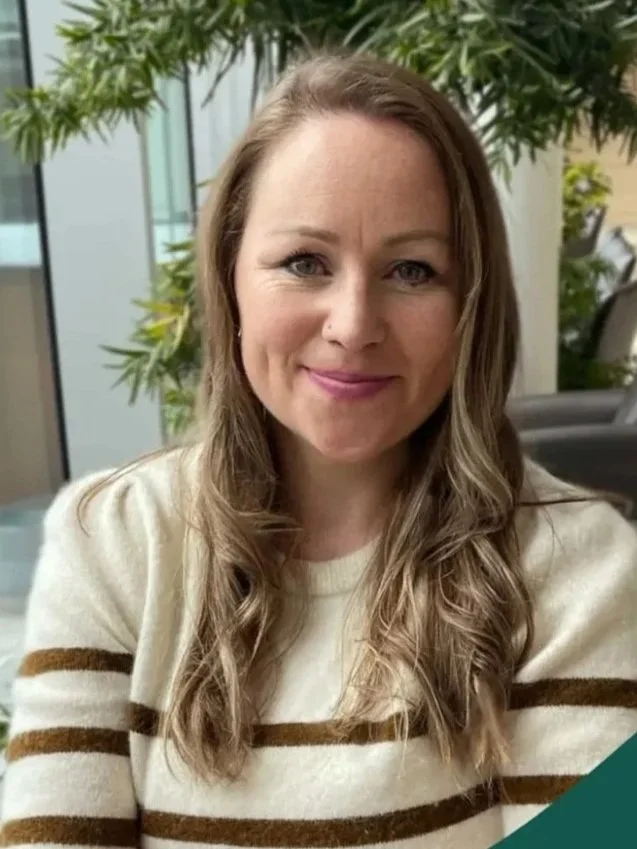
REGISTERED PROVISIONAL PSYCHOLOGISTCLAIRE GRANSON, MC
Claire's Approach
Steady. Relational. Focused on helping you feel seen, especially when life feels uncertain or overwhelming.
Claire knows what it's like to struggle during a time when everything is "supposed" to be perfect, because she's lived it herself. As both a therapist and a mother, she brings not just clinical training but deep personal understanding to her work with expecting and new parents.
She creates a safe space where you can finally exhale and make sense of what you're going through. Claire understands that asking for help, especially when everything seems fine from the outside, is one of the hardest things you'll do. She'll hold space for all of it.
Specializing In:
Pregnancy & Postpartum
Anxiety/Depression
Birth Trauma & Loss
Identity Shifts
Relationship Strain
Parents Who Look "Fine"

REGISTERED PROVISIONAL PSYCHOLOGISTAvery Rozak-Leach, MC
Avery's Approach
Compassionate. Practical. Results-oriented, grounded in helping you identify what's getting in your way and creating actionable steps forward.
Avery bridges the medical and emotional sides of perinatal experience. With a Master's in Counselling and a Bachelor's in Biology, she understands not just what you're feeling but the physiological reality of why you're feeling it, and what that actually means for your recovery.
She helps you advocate for yourself in medical settings, in your relationships, and in your own mind. Avery helps mothers move from feeling stuck and anxious to feeling stronger and clearer.
Specializes In:
Postpartum Anxiety & Panic
Intrusive Thoughts
Medication Decisions in Pregnancy
Depression & Low Mood
Partner Communication
Frequently Asked Questions about Perinatal Counselling
-
Perinatal counselling is psychological support during pregnancy and the postpartum period (roughly the year before and after birth). It helps parents navigate mood changes, anxiety, identity shifts, relationship adjustments, and the challenges of caring for a newborn.
Those experiencing anxiety that has become unmanageable often describe: A lost sense of self, strategies that were once helpful no longer working, feeling paralyzed, physical symptoms (including headaches, weight changes, illness and trouble sleeping), overthinking and replaying conversations and events in their head, second-guessing decisions, and feeling stuck and unable to move forward.
-
Yes. Hormonal changes, lack of sleep, and the major transition into parenthood can leave many new parents feeling tearful, anxious, or overwhelmed. This is often called the “baby blues,” and it usually improves within the first two weeks after birth. If symptoms persist beyond that, intensify, or interfere with daily life, it may be postpartum depression or anxiety, which are common and treatable with professional support.
-
The “baby blues” typically resolve on their own and feel more like temporary mood swings. Postpartum anxiety, on the other hand, involves ongoing, racing thoughts, restlessness, difficulty sleeping even when the baby sleeps, or intrusive worries that feel hard to control. If you’re unsure, it’s best to talk with a perinatal mental health professional who can help you sort out what’s happening.
-
Yes. Research shows that evidence-based counselling approaches — such as cognitive-behavioural therapy (CBT), interpersonal therapy (IPT), and mindfulness-based interventions — can reduce symptoms of postpartum depression and anxiety. Therapy provides both practical coping strategies and emotional support, which can make the adjustment to parenthood feel less isolating and overwhelming.
-
Every parent’s experience is different, but common themes include:
Worry about the baby’s health and safety
Changes in mood, sleep, or energy
Relationship and intimacy shifts after birth
Navigating extended family expectations
Identity changes and loss of independence
Grief after miscarriage, stillbirth, or infertility struggles
-
Yes. Partners often experience their own stress, worry, or feelings of helplessness. Counselling can support couples in communicating openly, sharing the mental load, and staying connected as they adjust to new roles.
-
You don’t need to wait until things feel unbearable. If anxiety, sadness, or exhaustion are making it hard to enjoy your baby, rest, or function day-to-day, reaching out early can help you feel steadier and supported sooner.
-
Absolutely. Online therapy is shown to be effective for perinatal anxiety and depression, and many new parents find it easier to attend sessions from home. Secure video sessions can be especially helpful when leaving the house feels difficult with a newborn.
At Core Psychology, our perinatal team provides warm, evidence-based support in Calgary and online across Alberta. Whether you’re preparing for birth, navigating postpartum changes, or coping with loss, you don’t have to do it alone.



Where you can find us.
Located in the heart of Marda Loop in Calgary, our office offers a tranquil space where you can take a breath and focus on you.