
First Responder & Family Therapy in Calgary
The work is demanding. Life outside it matters, too.
First responders are often expected to stay composed under extraordinary pressure. But the effects of demanding work aren't always confined to the job. At Core Psychology, we offer thoughtful, evidence-informed psychological support for first responders, and for the partners and families who share in the realities of that work.
In person in Marda Loop, or online across Alberta. Call or text 403.488.8912.

Being good at what you do doesn't mean it doesn't affect you.
The qualities that make someone effective in emergency and public safety work, such as vigilance, decisiveness, composure, and a deep sense of responsibility, are hard-won. They don't always switch off when the shift does.
For some people, that shows up as difficulty winding down, or sleep that doesn't quite restore. For others, it's a shorter fuse at home, a sense of being slightly removed from the people they love, or a fatigue that has less to do with hours worked than with what those hours held.
Much of it builds quietly. Few single calls change everything. More often it's the accumulation: years of being the steady one, of absorbing what others can't, of looking after everyone else first. Many first responders are also very good at not asking for help, because self-reliance is part of what the role demands.
None of this is inevitable, and none of it means something is wrong with you. But if any of it sounds familiar, it may be worth having a place to think it through.
Therapy for first responders and their families
Support for the person behind the role.
For police officers, firefighters, paramedics, dispatchers, emergency medical personnel, and other public safety professionals. Therapy can help you process difficult experiences, manage cumulative stress and burnout, and think through questions of identity, purpose, and relationships that a demanding career can raise.
It isn't only for after something goes wrong. Many people come to therapy to stay well, to sharpen how they handle pressure, or simply to have one conversation each week where they're not the one holding everything together.
- Stress, burnout, and emotional fatigue
- Difficult or distressing calls
- Sleep, irritability, and switching off
- Identity, career, and life transitions
The job affects more than the person doing it.
Spouses, partners, and children live with the rhythms of first responder work too: shift schedules that rearrange family life, plans that change at the last minute, and an extra share of the household and emotional load.
You might be navigating worry you rarely say out loud, a sense of distance at home, or the challenge of supporting someone without losing sight of what you need. You deserve support in your own right, whether or not your partner is in therapy.
- Unpredictable schedules and disrupted routines
- Carrying more of the emotional and household load
- Communication, distance, and reconnection
- Worry, uncertainty, and your own well-being

Couples counselling for first responders and their partners
Sometimes the distance isn't about the relationship. When one partner comes home quiet, it's easy for the other to read it as a verdict. Often it isn't. Withdrawal can be exhaustion. It can be the time it takes for a nervous system to stand down. And sometimes it's an act of care: a decision not to bring certain things home.
That protective instinct makes sense, but it can leave both people feeling alone in the same room. One is carrying what they won't share. The other is carrying the worry, the logistics, and the sense of being on the outside of something important.
If you're the first responder
Individual therapy offers a place to put down what you've been holding, so you have more of yourself left for home.
If you're the partner
Your experience matters on its own terms. Therapy can help you understand what's happening, and attend to your own needs.
Together, couples therapy can help you understand each other's experience more clearly, communicate with less guesswork, and find your way back to connection.
Evidence-based therapy for first responders: EMDR, CBT, EFT & more
We don't assume every first responder needs trauma treatment, or that every family is in crisis. We begin with you: what brought you in, what you'd like to be different, and what feels manageable to talk about.
From there, your clinician draws on evidence-informed approaches that fit your needs and their training. Therapy is collaborative and paced to you. It's structured enough to feel purposeful and flexible enough to make room for whatever is most present.
EMDR therapy
A structured approach for processing distressing experiences that continue to feel unresolved. Offered by Max Wood.
CBT & DBT
Practical skills for working with thoughts, emotions, stress, and distress. Offered by Max Wood.
Emotion-Focused Therapy (EFT)
Understanding emotional patterns, in yourself and in your closest relationships.
ACT & Narrative Therapy
Building flexibility around difficult experiences and reshaping the stories you tell about them. Offered by Leah Callao.
Family systems & interpersonal approaches
Exploring how stress moves through families, and how relationships can adapt. Offered by Leah Callao.
Music therapy-informed counselling
Creative, non-verbal ways in, especially helpful when words don't come easily.
Approaches vary by clinician and by what's clinically appropriate. We'll talk through options with you and won't prescribe a fixed protocol. Learn more about our trauma therapy and burnout counselling.
How therapy helps with stress, burnout, trauma and PTSD
Trauma & difficult experiences
Making sense of distressing experiences and the ways they can linger.
Family life & transitions
Supporting partners, children, and teens through the demands of first responder life.
Resilience & psychological fitness
Looking after your well-being proactively, not only when something feels wrong.
Meet our first responder therapists in Calgary
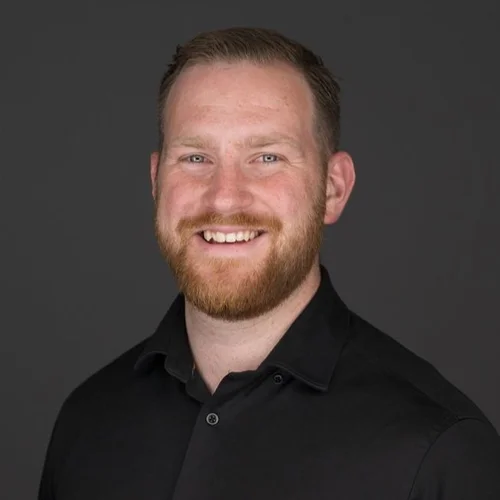
Marcus (Max) Wood, MC
Registered Provisional Psychologist
Max's work is practical, trauma-informed, and collaborative. He supports adults and professionals navigating stress, burnout, trauma, and relationship challenges, and he also works with teens and children. He brings a particular interest in men's mental health.

Leah Callao, MC, CCC, MTA
Certified Canadian Counsellor · Certified Music Therapist
Leah offers a steady, patient presence, especially for people who find it hard to put feelings into words. She works with adults, teens, and children around anxiety, emotional regulation, and relationship and family dynamics, with a strong sensitivity to how family and culture shape what we carry.
Confidential therapy for police, fire and EMS
Therapy is a space that's yours: one of the few places where you don't have to be capable, composed, or responsible for anyone else. What you share stays between you and your clinician, within the limits set by law and professional ethics.
Those limits include situations such as a risk of serious harm, child protection concerns, or a court order. If you use insurance, a benefits plan, or a third-party funder, some information, such as receipts or reports, may be shared with them, with your consent. Your clinician will walk you through all of this at your first session, and you're welcome to ask questions at any point.
In-person therapy in Marda Loop or online across Alberta
- In person in Marda Loop2032 33 Ave SW, Suite 205, Calgary
- Secure online therapyAcross Alberta through Jane, with no downloads, where clinically appropriate
- Individual, couples & family therapyIncluding teen and child counselling
- Daytime, evening & weekend sessionsAvailability varies by clinician
- Fees & insuranceMany extended health and benefits plans cover part or all of the cost. Check with your provider
First responder therapy FAQs
Do I need to have experienced a traumatic incident to benefit from therapy?
No. Many people come to therapy for stress, sleep, relationships, career questions, or simply to stay well. There doesn't need to be a single incident, a diagnosis, or a crisis for therapy to be useful.
Can my spouse or partner attend therapy independently?
Yes. Partners and family members can see a clinician for their own support, whether or not the first responder in their life is in therapy.
Is therapy confidential for first responders?
Yes, within the limits set by law and professional ethics, such as a risk of serious harm, child protection concerns, or a court order. If a third party such as an insurer or funder is involved, some information may be shared with your consent. Your clinician will explain this clearly before you begin.
Can therapy help with stress and burnout even if I don't have PTSD?
Absolutely. Cumulative stress, burnout, and emotional fatigue are among the most common reasons people seek support. You can read more about our burnout counselling.
Do you offer couples counselling for first responders and their partners?
Yes. Core Psychology offers couples therapy in person and online. We can help you find the clinician on our team who is the best fit for you both.
Is online therapy available?
Yes. We offer secure online therapy across Alberta through Jane, where clinically appropriate.
Does insurance cover therapy for first responders?
Coverage depends on your plan. Many extended health and employee benefits plans cover part or all of the cost of psychological services. Please check directly with your provider. You'll receive a receipt after each session to submit for reimbursement. See our fees page for details.
You spend a lot of time showing up for others. There's room to show up for yourself, too.
Whether you're a first responder, a partner, or a family member, getting started can be a short, low-pressure conversation.
Or call or text 403.488.8912. If you are in crisis, call 911 or the Distress Centre Calgary at 403-266-4357.